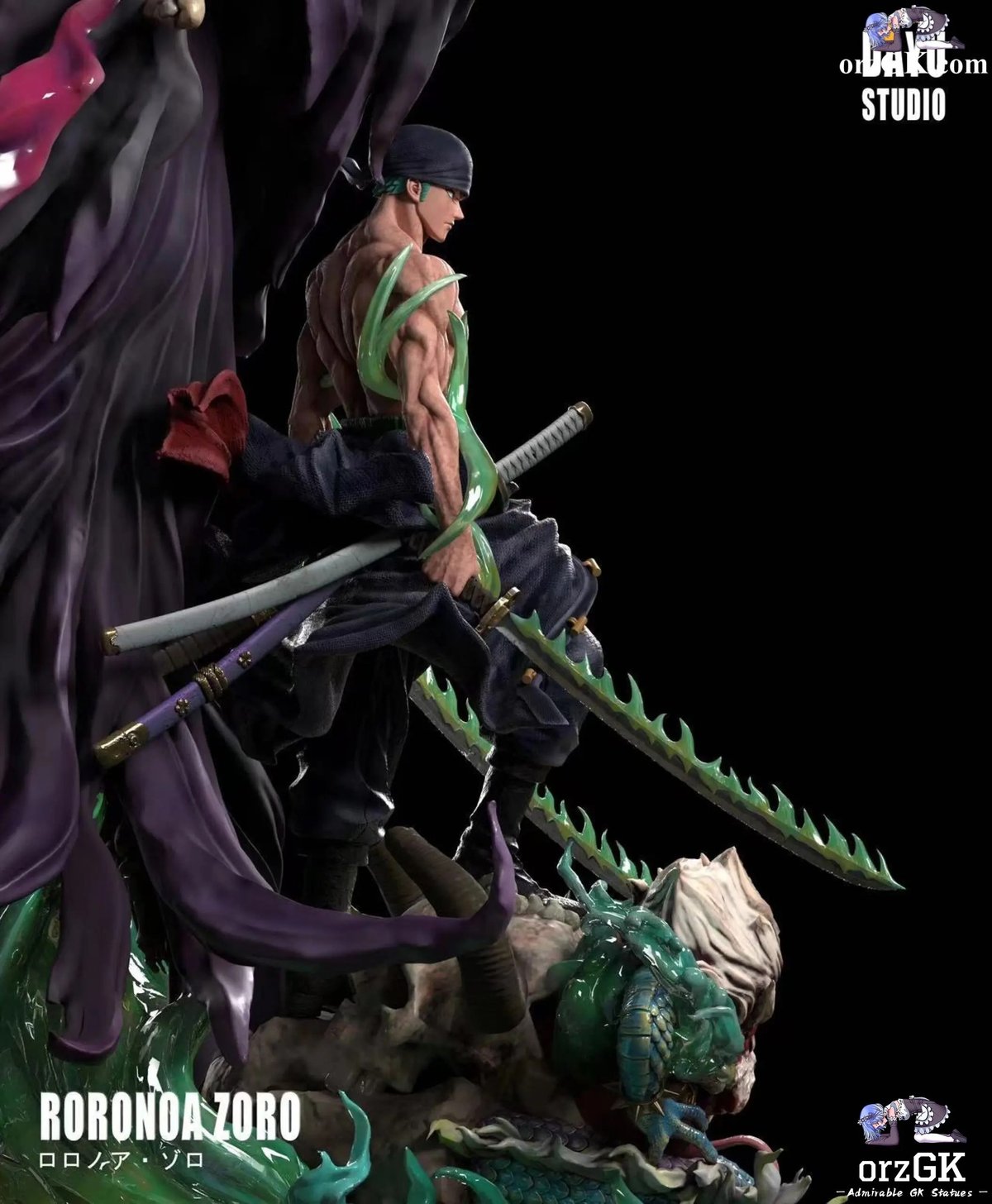
Wait, Roronoa Zoro in Yu Yu Hakusho? If that’s the question flashing through your mind, you're not alone! It's a cross-franchise concept that sparks immediate intrigue and, let's be honest, a touch of head-scratching. While the legendary swordsman of the Straw Hat Pirates has never canonically crossed paths with Yusuke Urameshi and his spirit detective crew, the fascinating premise of this comparison invites us to dive deep into the shared DNA of shonen storytelling, character archetypes, and, most importantly, the incredible impact of voice acting that transcends anime universes.
This flagship Super Pillar hub isn't about fabricating a crossover episode; it's about exploring the underlying connections and fan-driven hypotheticals that make anime discussions so rich. We'll unpack why such a comparison might be made, focusing on how character traits, narrative roles, and the distinct vocal performances of their respective actors can create unexpected parallels, even between seemingly disparate worlds.
The Curious Case of Zoro in Yu Yu Hakusho: A Cross-Franchise Inquiry
The idea of Roronoa Zoro, the formidable pirate hunter with a three-sword style and an infamously bad sense of direction, appearing in the demon-filled realm of Yu Yu Hakusho is, on the surface, purely fantastical. One Piece and Yu Yu Hakusho exist in their own distinct universes, each with unique power systems, lore, and character rosters. So, how do we "explain" this intriguing notion? We do so by looking beyond literal appearances and into the heart of what makes these characters resonate.
This deep dive is less about a direct narrative insertion and more about a thought experiment: If Zoro were to exist within the Yu Yu Hakusho framework, or if fans sought to compare him to its iconic figures, what characteristics, drives, and even vocal interpretations would align or contrast? It's in these thematic overlaps and performance analyses that the "explanation" truly begins to take shape.
Unpacking the "Voice Actor Comparison" Angle
At the core of our exploration is the explicit mention of "Voice Actors Comparison" in our title. The vocal performances of iconic characters are paramount to their identity, often shaping how we perceive their personality, strength, and emotional depth. For Roronoa Zoro, his formidable presence in both Japanese and English dubs is inextricably linked to the talents of his voice actors.
In Japan, Kazuya Nakai's gravelly, confident delivery defines Zoro's serious demeanor and unwavering resolve. Stateside, Christopher Sabat imbues the character with a similar blend of stoicism and intensity, making Zoro instantly recognizable across linguistic barriers. These actors don't just speak lines; they breathe life into the character, subtly influencing how fans might draw comparisons to other powerful, determined figures in anime. To truly grasp how Zoro's essence might be perceived in a Yu Yu Hakusho context, we must first delve into Zoro's iconic voice actors, Kazuya Nakai and Christopher Sabat, and their immense impact on his character. Their performances are the auditory bridge that allows us to imagine Zoro's presence and impact in any narrative setting.
Zoro's Enduring Traits: Echoes Across Shonen Universes
Despite hailing from different manga generations, One Piece and Yu Yu Hakusho share fundamental shonen tropes: powerful heroes, epic battles, and unbreakable bonds of friendship. Zoro's defined characteristics, from his combat prowess to his unwavering loyalty, find interesting mirrors and contrasts within the Yu Yu Hakusho cast.
Swordsmen and Spirit Detectives: A Duel of Dominance
Zoro is, first and foremost, a master swordsman, dedicating his life to becoming the strongest in the world. His three-sword style and mastery of Haki make him a force to be reckoned with. In the world of Yu Yu Hakusho, combatants like Hiei, with his swift swordplay and demonic abilities, represent a similar pinnacle of individual power and dedication to their craft. The sheer spectacle of their battles and their relentless pursuit of strength create fertile ground for comparison. If you’ve ever wondered how Zoro’s advanced Conqueror's Haki might stack up against Hiei's demonic energy or his powerful Jagan Eye, then it’s time to imagine a fantasy clash between Zoro and Hiei.
Beyond individual duels, Zoro’s continuous training and his relentless journey to power align perfectly with the high stakes and constant evolution seen in Yu Yu Hakusho's most intense arcs. His unwavering drive to surpass his limits mirrors the competitive spirit that defines the Demon World's most grueling challenges, inviting us to draw intriguing connections between Zoro's relentless pursuit of strength and the epic scale of the Makai Tournament.
Loyalty Beyond Reproach: Zoro, Kuwabara, and the Bonds of Brotherhood
One of Zoro's most defining traits is his fierce, uncompromising loyalty to Monkey D. Luffy and the Straw Hat Pirates. He is the crew's rock, willing to sacrifice anything for his captain's dream and the well-being of his nakama. This kind of steadfast devotion isn't exclusive to One Piece. In Yu Yu Hakusho, Kazuma Kuwabara, though often comedic, possesses a heart of gold and an unyielding loyalty to Yusuke and his friends. His refusal to back down for his comrades, even against overwhelming odds, reflects a similar spirit to Zoro. To fully appreciate these shared values, you might want to explore the surprising parallels between Zoro's steadfast loyalty and Kuwabara's unwavering dedication.
Furthermore, as Luffy's first mate, Zoro often acts as a stern, pragmatic voice, enforcing the harsh realities of their pirate life while still holding Luffy's vision above all else. This dynamic leadership, balancing unwavering support with crucial checks, can be thoughtfully examined alongside Yusuke Urameshi's own journey as the leader of his spirit detective team. Understanding how these powerful figures guide and protect their comrades offers a fascinating look into their distinct, yet equally effective, approaches. Consider it the perfect opportunity to compare the distinct leadership styles of Zoro and Yusuke and see how their strong wills shape their respective crews.
The Weight of Scars and Resilience: Zoro, Mukuro, and Enduring Trauma
Both Zoro and several Yu Yu Hakusho characters bear physical and emotional scars that tell stories of past battles and hardships. Zoro's torso is a map of conflict, most notably the diagonal cut from Dracule Mihawk and the permanent scar over his left eye, symbols of his continuous journey and sacrifices. This resilience in the face of immense pain resonates deeply with characters like Mukuro, whose harrowing past of abuse led her to self-inflict terrible scars as a means of escape and empowerment. Her strength, forged in fire and trauma, mirrors the grit and determination Zoro displays after every defeat. To truly appreciate the depth of their inner fortitude, it's insightful to uncover the shared resilience of scarred warriors like Zoro and Mukuro.
Codes of Honor and Fractured Convictions: Zoro and Sensui's Philosophies
Zoro, despite not being a samurai, adheres to a rigorous degree of bushido, a personal code of honor that dictates his actions and his unwavering resolve to never use trickery or escape a fight. He faces every challenge head-on, driven by an internal compass of integrity. In Yu Yu Hakusho, Shinobu Sensui, the antagonist of the Sacred Energy arc, also operates under a complex, albeit fractured, personal philosophy. His "seven personalities" and warped sense of justice stem from a profound disillusionment with humanity. While Zoro's code is one of unwavering strength and loyalty, Sensui's is a tragic reflection of idealism twisted into extremism. Examining these two characters allows for a fascinating contrast in how deeply held beliefs, whether steadfast or shattered, shape a warrior's path. It's a compelling reason to examine how Zoro's personal code of honor might echo in the complex philosophy of Shinobu Sensui and appreciate the nuances of conviction.
Legacies and Destinies: Unveiling Hidden Pasts
Recent revelations in One Piece have added layers to Zoro's background, while Yu Yu Hakusho's ending solidified the hidden heritage of its protagonist. These unexpected familial connections provide another intriguing avenue for comparison.
The Threads of Heritage: Zoro's Wano Roots and Yusuke's Mazoku Bloodline
For much of One Piece, Zoro's lineage was largely unknown, yet Volume 105 revealed his fascinating connection to the Shimotsuki family of Wano Country, including a distant relation to Kuina and even the legendary samurai Ryuma. This unexpected revelation of a powerful, warrior ancestry fundamentally reshapes our understanding of Zoro’s innate talent and destiny. Similarly, Yu Yu Hakusho delivers a seismic shock with the revelation of Yusuke Urameshi's true heritage: he is a distant descendant of the powerful Battle God Raizen, carrying the Mazoku gene that eventually activates. Both characters, despite their initial self-made personas, are ultimately tied to powerful legacies that explain their inherent strength and drive. To fully appreciate these intertwined destinies, it's worth taking a moment to delve into the fascinating parallels between Zoro's recently revealed family legacy and Yusuke's surprise Mazoku heritage.
Mentorship and Trust: Zoro's Allegiance and Genkai's Vision
Zoro's journey is heavily influenced by figures who push him to his limits, none more so than Dracule Mihawk, his reluctant mentor during the two-year time-skip. This relationship, built on a foundation of intense training and a profound respect for strength, showcases Zoro's capacity for allegiance and growth under a powerful guide. This echoes the impact of mentorship within Yu Yu Hakusho, particularly through Genkai. A formidable martial artist and spiritual master, Genkai not only trained Yusuke but also entrusted her legacy and her vision of peaceful coexistence between humans and demons to her friends. Both Zoro's unwavering loyalty to Luffy (and to Mihawk's teachings) and Genkai's enduring faith in her chosen successors represent powerful forms of trust and the continuation of a vision. You can truly understand how Zoro's unwavering loyalty to Luffy can be seen alongside Genkai's enduring legacy of trust and mentorship.
A Universe of Connections: Beyond Literal Crossovers
While Roronoa Zoro will likely never literally appear wielding his three swords alongside Yusuke Urameshi, the very idea of "Roronoa Zoro in Yu Yu Hakusho explained by Voice Actors Comparison" opens a rich dialogue about the universal themes that define great shonen anime. It highlights how shared archetypes of strength, loyalty, trauma, and destiny resonate across different narrative landscapes. Moreover, it underscores the profound influence of voice actors who, through their distinctive performances, imbue these characters with qualities that make them feel connected, even when separated by entire universes.
This exploration celebrates the spirit of fandom—the imaginative leaps and analytical dives that connect beloved characters in unexpected ways. As long as there are powerful heroes, epic sagas, and unforgettable voices, the conversation about how they might relate, compare, or even clash will continue to spark our imaginations.